
Network Layer in OSI Model-Full Explained
The third layer of the Open Systems Interconnection (OSI) is called the network layer. While the Data Link Layer functions mostly inside Wide Area Network (WAN) and Local Area Network (LAN), Network Layer handles the responsibility of the transmission of data in different networks.
It has no use in the place where two computers are connected on the same path or link. It has the ability to route signals through different channels and because of that, it is considered a network controller. Through this layer, data is sent in the form of packets.
The primary responsibilities handled by the Layer are the Logical connection of a setup, routing, delivery error reporting, and data forwarding.
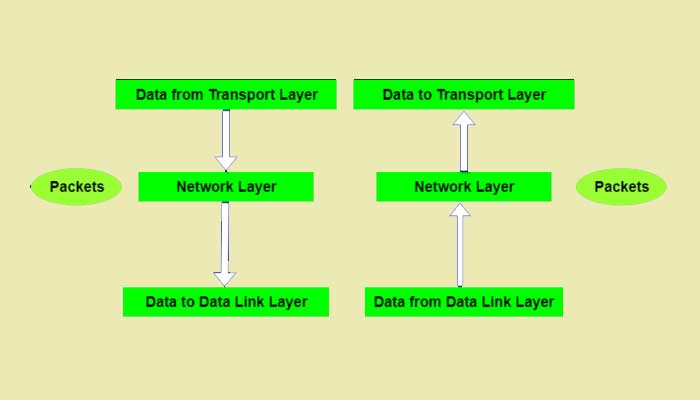
Because of its functionality and responsibilities, the Network Layer is often seen as the backbone of the entire OSI Model. Hardware devices such as routers, bridges, firewalls, and switches are a part of it with which it creates a logical image of the communication route that can be implemented with a physical medium.
Read more
It has no use in the place where two computers are connected on the same path or link. It has the ability to route signals through different channels and because of that, it is considered a network controller. Through this layer, data is sent in the form of packets.
The primary responsibilities handled by the Layer are the Logical connection of a setup, routing, delivery error reporting, and data forwarding.
Because of its functionality and responsibilities, the Network Layer is often seen as the backbone of the entire OSI Model. Hardware devices such as routers, bridges, firewalls, and switches are a part of it with which it creates a logical image of the communication route that can be implemented with a physical medium.
Read more
No comments